Online addiction treatment in Alabama
QuickMD offers private, judgment-free addiction treatment online in Alabama for substance use disorders, including treatment with Suboxone®.
- Get support as soon as today
- Same-day prescriptions
- Over 1.5 million visits completed
Medications require a consultation with a licensed clinician via QuickMD. If eligible, the clinician will recommend the best option for you. Alabama state law requires at least one in-person visit every 12 months. Satisfaction rating from patient experience survey results collected May 2025.
How online doctor visits work
Book an online doctor visit in minutes. No insurance required.
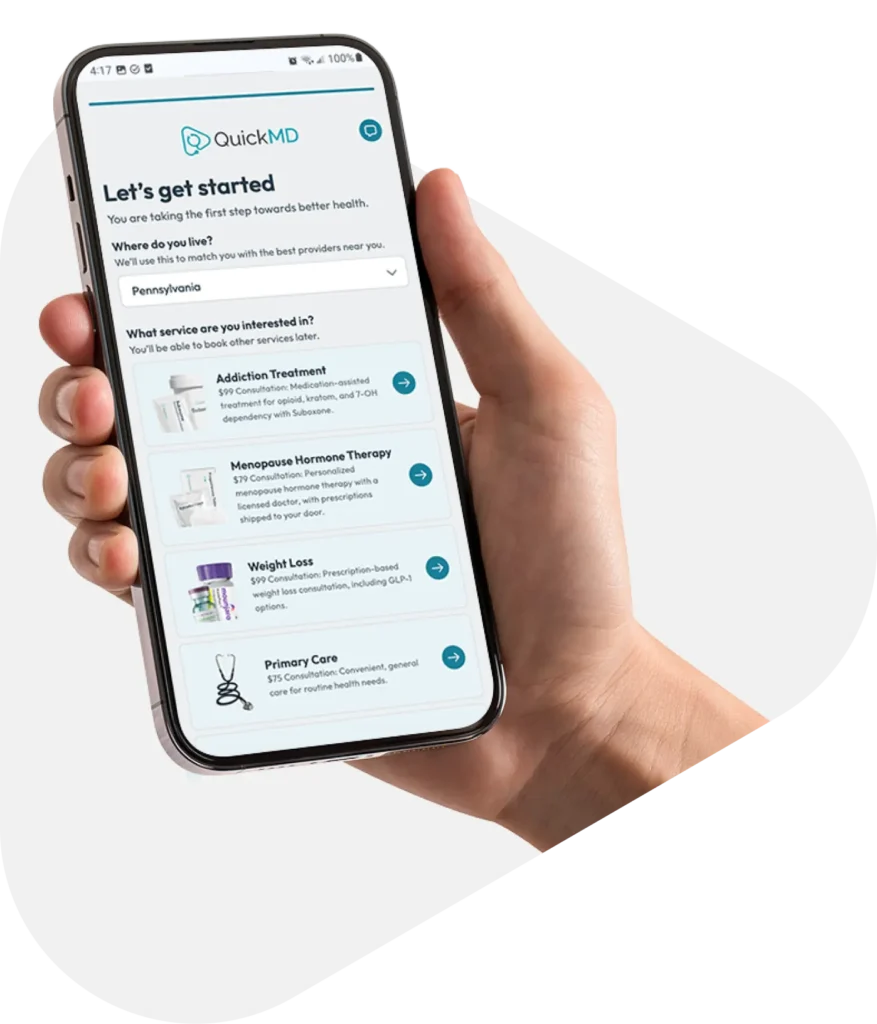
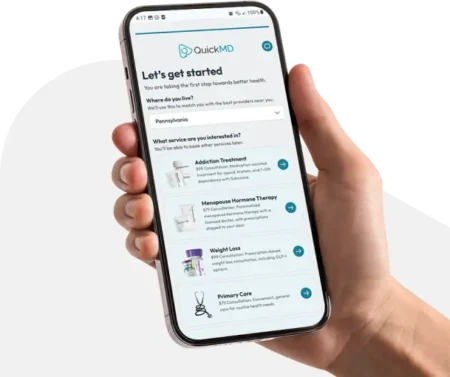
Answer a few questions
Tell us what you need. We'll match you with licensed doctors who treat your condition in your state.
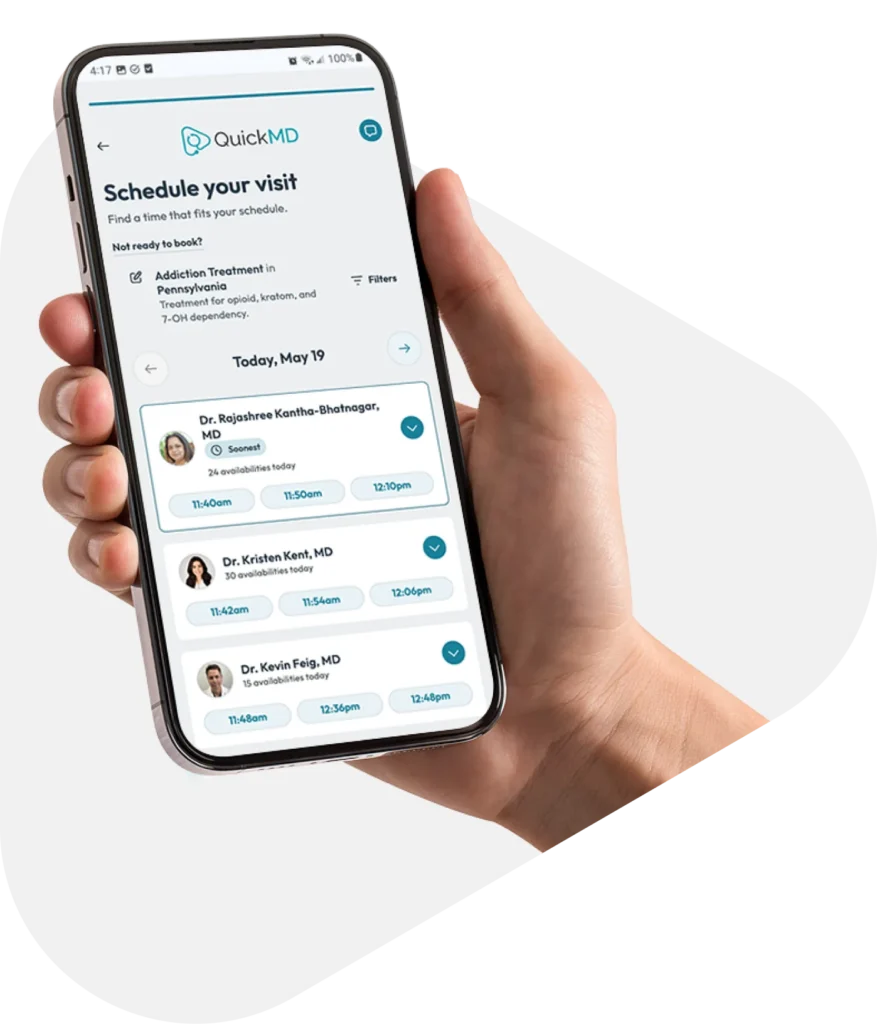
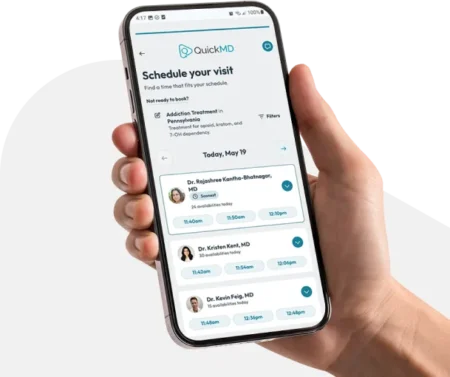
Choose your doctor
Pick your doctor, create your account, and book a time that works for you. Same-day visits are often available.
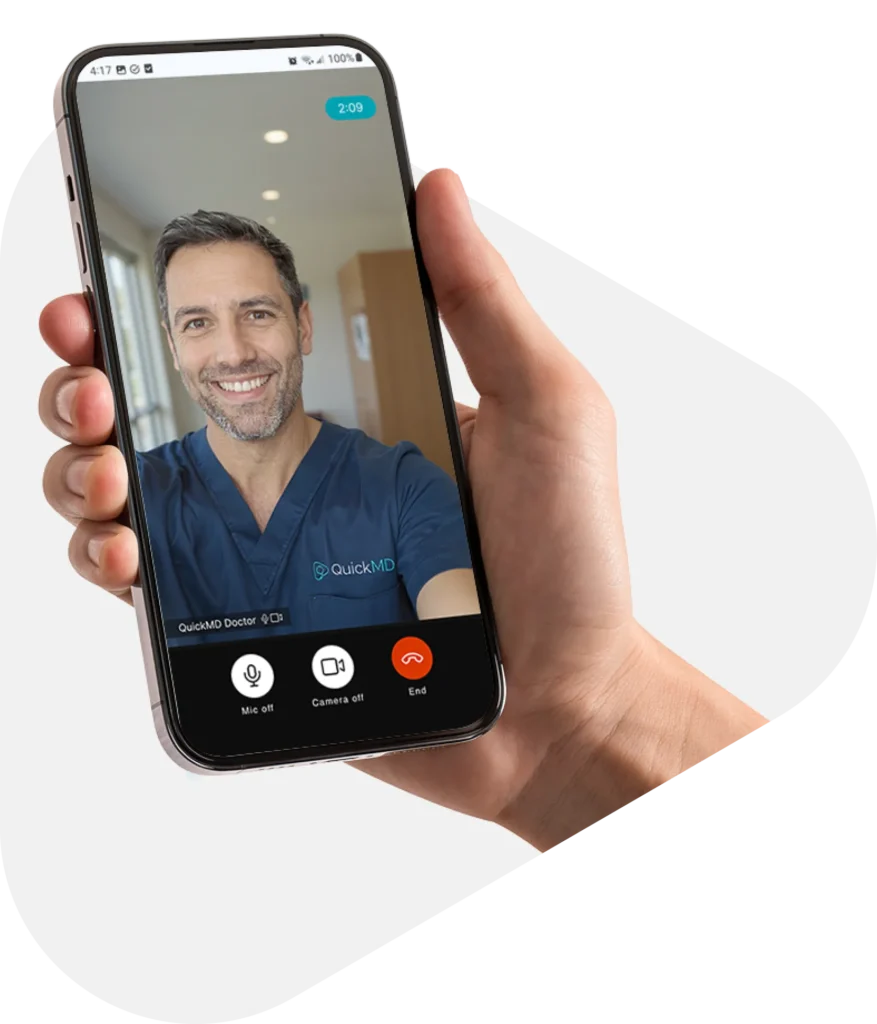
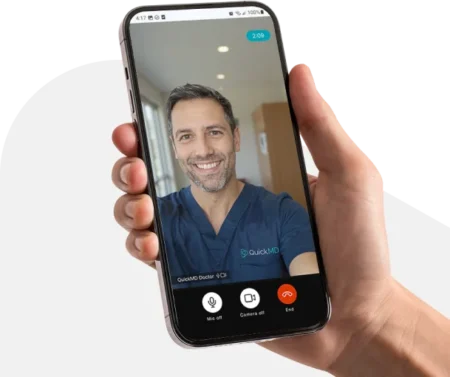
Meet by phone or video
Talk with a doctor by private phone or video and get your prescription the same day if appropriate.
Manage opioid cravings and withdrawal with Suboxone® treatment
Private and judgment-free video visits now available.
What our patients are saying

Appointments
7 days/week

Same-day
prescriptions

100% online
and secure
Stop opioid cravings and withdrawal
Same-day visits. No insurance required.
Start treatment with Suboxone today
At QuickMD, getting your Suboxone prescription is simple. Schedule a quick phone or video appointment with a licensed clinician and we’ll send your prescription directly to your pharmacy.
Meet our licensed clinicians in Alabama
We make it easy to find licensed clinicians in Alabama. Meet trusted experts, available seven days a week for virtual care.
-

Dr. Abdullah Almehbash
Licensed clinician
AlabamaNow accepting new patients -

Dr. Adnan Khan
Licensed clinician
AlabamaNow accepting new patients -

Dr. Angela Schultz
Licensed clinician
AlabamaNow accepting new patients -

Dr. Azhar Ahmed
Licensed clinician
AlabamaNow accepting new patients -
Dr. Christin Barry
Licensed clinician
AlabamaNow accepting new patients -
Dr. Clint Seymour
Licensed clinician
AlabamaNow accepting new patients -

Dr. Daniel Funsch Jr
Licensed clinician
AlabamaNow accepting new patients -
Dr. David Nguyen
Licensed clinician
AlabamaNow accepting new patients -
Dr. Diana Warren
Licensed clinician
AlabamaNow accepting new patients -

Dr. Dorcas Lomo
Licensed clinician
AlabamaNow accepting new patients -

Dr. Eslam Mohamed
Licensed clinician
AlabamaNow accepting new patients -
Dr. Krishna Israni
Licensed clinician
AlabamaNow accepting new patients -
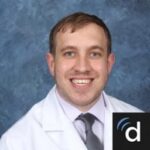
Dr. Kyle Meggison
Licensed clinician
AlabamaNow accepting new patients -

Dr. Mazna Ahmad
Licensed clinician
AlabamaNow accepting new patients -
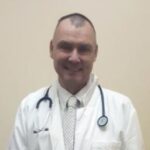
Dr. Michael Carr
Licensed clinician
AlabamaNow accepting new patients -
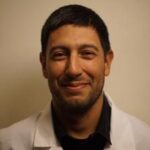
Dr. Michael Torres
Licensed clinician
AlabamaNow accepting new patients -

Dr. Muhammad Imran
Licensed clinician
AlabamaNow accepting new patients -

Dr. Nicole Claveria
Licensed clinician
AlabamaNow accepting new patients -
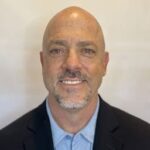
Dr. Paul Flatley
Licensed clinician
AlabamaNow accepting new patients -

Dr. Sean Bandzar
Licensed clinician
AlabamaNow accepting new patients -
Dr. Shahzad Chaudhary
Licensed clinician
AlabamaNow accepting new patients -

Dr. Sumera Amin
Licensed clinician
AlabamaNow accepting new patients -

Dr. Tiffani Maycock
Licensed clinician
AlabamaNow accepting new patients
Why virtual addiction treatment matters in Alabama
In Alabama, finding addiction treatment can feel like an uphill climb, especially if you live outside the bigger cities. Nearly 44% of the population in Alabama lives in rural counties. Out of the 67 counties in Alabama, 55 of them are considered rural according to the Alabama Department of Public Health.
Every county in the state has areas where people struggle to find healthcare at all. Currently, Alabama’s counties are either fully or partially designated as a Medically Underserved Area, according to the Health Resources & Services Administration (HRSA). This means that for many people across the state, access to consistent, high-quality care remains limited.
And when it comes to getting care, many Alabama residents say the hardest part isn’t the cost, it’s finding a doctor in the first place, according to the Alabama Office of Healthcare Workforce. This lack of access makes it even harder for those struggling with addiction to get the support they need.
That’s why virtual addiction treatment is making such a difference in Alabama. Now, you can connect with a licensed provider from home, safely and privately, without waiting weeks for an appointment or driving hours to the nearest clinic. With QuickMD, care meets you where you are, on your schedule, at your pace.
Whether you’re in Birmingham, Montgomery, or Perry County, this kind of access can turn months of waiting into care you can start today, giving you a path forward when you need it most.
How access to addiction treatment is improving in Alabama
Alabama has expanded telehealth access in recent years, making it easier to get care for addiction and other health needs remotely. In 2021, the Alabama Telehealth Access Act (SB272) made it possible for healthcare providers to deliver addiction treatment virtually, including prescribing Medication-Assisted Treatment (MAT) for opioid use disorder.
And thanks to federal state Opioid Response (SOR) grants, Alabama has received over $90 million from 2018 to 2023, helping more people access MAT, peer recovery services, behavioral therapy, and harm reduction like naloxone.
Moreover, Alabama Medicaid now reimburses certain telemedicine services, including addiction, mental health services, counseling, and MAT evaluations, making care more affordable for people across Alabama.
With QuickMD, we make getting started with treatment feel easier. You can connect with a licensed provider online, manage your care from home, and get support wherever you are, whether you’re in Huntsville, Montgomery, or McMullen. We’re here to support you, so you can take control of your health.
Tips for managing addiction treatment
1. Make a small goal every day
Recovery can feel big. Break it down into small, doable steps, like drinking enough water, taking a walk, or checking in with your provider.
2. Celebrate your wins (big or small)
Every step forward counts. Give yourself credit for showing up, even on tough days.
3. Create a comfort routine
When cravings or stress hit, having a comfort routine can help. Maybe it’s listening to a favorite song, taking deep breaths, or enjoying a cup of sweet tea. Find small habits that help you feel steady.
4. Use technology to your advantage
In Alabama, virtual support can be a lifeline. Use apps, reminders, or online support groups to help stay connected, track your progress, and get encouragement right from your phone, no matter where you live.
We also offer these services in Alabama
At QuickMD, we're committed to bringing convenient, affordable, and compassionate virtual care to patients across Alabama. In addition to addiction treatment, we proudly offer:
Medical weight loss
Our online weight loss treatment helps you explore options like Ozempic® and Mounjaro® with licensed clinicians, offering support tailored to your health goals.

Start treatment with Suboxone today
At QuickMD, getting your Suboxone prescription is simple. Schedule a quick phone or video appointment with a licensed clinician and we’ll send your prescription directly to your pharmacy.
Frequently asked questions about MAT in
Alabama
Yes, Alabama Medicaid covers some substance use disorder treatments, including inpatient and outpatient services, like counseling. However, residential treatment programs are typically not covered. If you’re unsure what your plan covers, it’s always okay to ask your provider, who can help you understand your options.
Yes. Suboxone® (buprenorphine/naloxone) is a Schedule III controlled substance in Alabama and across the U.S. That means it needs to be prescribed by a licensed provider who is approved to treat opioid use disorder, often through MAT programs like QuickMD’s.
Alabama has taken several important steps to address the opioid crisis and make addiction treatment more accessible. One of these is House Bill 208, which protects healthcare providers who prescribe or give naloxone, an emergency medication that can reverse an opioid overdose. This law makes sure that people who use or give naloxone during an overdose won’t face legal trouble, helping save more lives in critical moments.
The state has also passed laws to limit how much and how often opioids can be prescribed, aiming to reduce the risk of addiction. Together with expanding telemedicine services and increasing funding for treatment programs, these changes are helping more people across Alabama get the care and support they need.