What you’ll learn
We’ll break down how 7-OH works in the brain, why Suboxone is an effective and evidence-backed treatment for kratom and 7-OH dependence, and what recovery through a Medication-Assisted Treatment (MAT) program actually looks like.
Over the past decade, kratom and 7-OH have stealthily crept their way into the lives of everyday Americans. You can find it at gas stations, convenience stores, and smoke shops, often sitting right next to energy drinks and protein bars. That kind of visibility made it feel safe, even though something darker lurked behind the colorful packaging and “natural” marketing claims.
The reasons people turn to kratom are varied and deeply personal. Some are managing chronic pain. Some are trying to ease anxiety without a prescription. Others had been using opioids and wanted to find a way out on their own terms. Kratom was billed as something plant-based and readily accessible in corner stores.
The fact that kratom is not regulated by the FDA presents a double-edged sword. No prescription is required, but there’s also no safety testing, no consistent dosing, and no real guarantee of what’s in every bag or bottle. Products containing 7-OH raise the stakes even further. These concentrated kratom extracts are significantly more potent than standard kratom, and they can create a dependence that takes people by surprise.
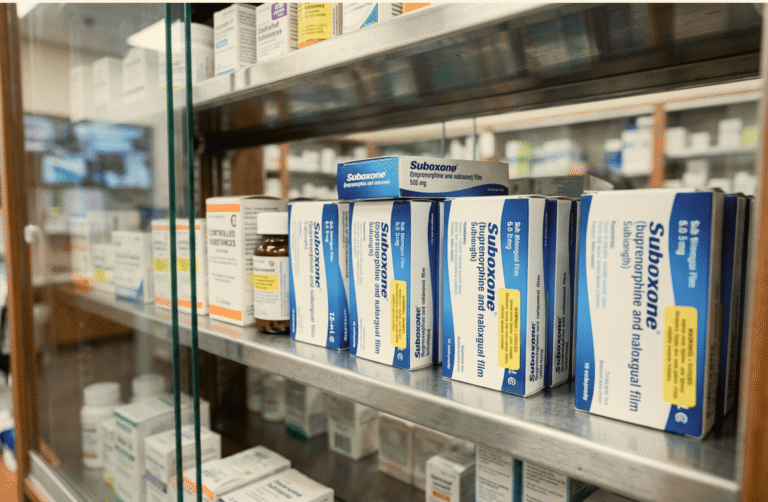
If that’s where you are right now, you may already be wondering if Suboxone® can help with kratom or 7-OH withdrawal? The answer is yes, and we’ll help you better understand why, as well as how Medication-Assisted Treatment (MAT) can help you take control of your health.
What is 7-OH, and how does it differ from other opioids?
To understand why Suboxone works for kratom and 7-OH addiction, you first need to know what makes 7-OH unique. As we explored in our previous article about kratom and 7-OH, this compound is far more potent than regular kratom alkaloids.
7-hydroxymitragynine (7-OH) is a naturally occurring compound found in kratom, or Mitragyna speciosa, a tree native to Southeast Asia. In its natural form, 7-OH exists in relatively small concentrations within the kratom plant. The problem is that many commercial products, particularly liquid extracts and high-potency powders, are artificially enhanced with 7-OH to increase their effects. This makes them much stronger than standard kratom, and the effects are so much harder to predict.
7-OH is a potent mu-opioid receptor agonist. It activates the same receptors in your brain as traditional opioids. In animal studies, it’s been shown to be up to 13 times more potent than morphine. That’s a significant number and helps explain why dependence can develop faster than most people expect.
Here’s how 7-OH differs from more traditional opioids:
- Longer duration: 7-OH stays in your system longer than opioids like heroin or morphine. That means withdrawal follows a different timeline. While heroin withdrawal might peak within days, 7-OH can create a more drawn-out process that catches people off guard.
- Receptor binding: While 7-OH activates the same mu-opioid receptors as traditional opioids, it also interacts with other systems in the brain, including those that regulate mood and anxiety. That can make the withdrawal experience feel different from what someone familiar with other opioids might expect.
- Variable potency: Unlike pharmaceutical opioids with consistent dosing, kratom products containing 7-OH can vary wildly in strength. That inconsistency makes tolerance harder to track and dependence easier to miss.
Understanding how 7-OH works also helps explain why Suboxone is so effective against it. Both 7-OH and traditional opioids act on the same receptors. And Suboxone is specifically designed to address those receptors in a way that’s stable, predictable, and medically supported.
Understanding kratom use disorder
Kratom use disorder develops when someone becomes physically or psychologically dependent on kratom products. Most people who develop it don’t see it coming.
Kratom is sold openly. It’s often marketed as a supplement or herbal remedy without clear warnings about what’s inside. That disconnect can make it more difficult to recognize when use has shifted from a coping tool into something more.
Some common signs of kratom use disorder include:
- Tolerance: You need more kratom or 7-OH than you used to in order to feel the same relief.
- Withdrawal: When you try to cut back or stop, you feel sick, anxious, restless, or physically uncomfortable.
- Difficulty cutting back: You want to use less, or you’ve tried to stop, but it hasn’t worked.
- Using despite problems: Kratom or 7-OH is affecting your work, your relationships, or your daily life, but you’re still using it.
- Cravings: Thoughts about kratom or 7-OH show up regularly throughout your day, even when you’re not planning to use.
Kratom use disorder often develops gradually. You might have started using kratom or 7-OH for chronic pain, anxiety, or as a way to step back from prescription opioids. For a while, it may have worked. But somewhere along the way, the choice became harder. Especially with concentrated 7-OH products, which interact with the brain the same way traditional opioids do, physical dependence can take hold faster than people expect.
No matter how you came to start using kratom or 7-OH, it’s important to know that help is available. Opioid use disorder (OUD), including dependence on kratom and 7-OH, is a recognized medical condition. It’s a brain disorder, not a moral failing. And like other medical conditions, it responds to proper treatment.
Does Suboxone work for kratom withdrawal?
Recent clinical studies confirm that Suboxone is effective for treating 7-OH dependence and kratom use disorder. Because 7-OH and traditional opioids act on the same receptors, buprenorphine is well-positioned to help with kratom dependence. A published case report documented successful treatment of kratom addiction with buprenorphine-naloxone, noting that it “helped alleviate withdrawal symptoms and allowed [the patient] to abstain from kratom.”
Another clinical study followed 28 people who were battling kratom use disorder and discovered similarly encouraging results. Participants started on a low Suboxone dose that was gradually increased. This research showed:
- 15 patients reported significant relief from withdrawal symptoms and cravings at their second appointment.
- None of the people in the study experienced sudden, severe withdrawal when they started Suboxone with proper medical guidance.
- Most people felt steady and comfortable on their Suboxone dose within 2-3 weeks. This is normal. Your body just needs time to adjust.
Multiple case reports have documented successful treatment outcomes with buprenorphine and buprenorphine-naloxone for kratom and 7-OH withdrawal, making this an evidence-based approach rather than an experimental treatment.
Does Suboxone block kratom?
Yes, Suboxone blocks kratom, and that’s one of the main reasons why it works so well.
Suboxone contains two active medications:
- Buprenorphine is a partial opioid agonist, meaning it activates the brain’s opioid receptors, but only partway. That partial activation is enough to ease withdrawal symptoms and reduce cravings, without producing the intense feelings of euphoria that come with full opioids.
- Naloxone prevents misuse by blocking activation of those receptors.
Suboxone works differently from 7-OH because it contains buprenorphine, which only partially turns on your brain’s opioid receptors. While 7-OH fully activates these receptors, buprenorphine gives you just enough activation to feel stable without the intense highs and lows.
Where 7-OH creates dramatic peaks and drops in receptor activity, buprenorphine provides a steady, long-lasting signal. Your brain gets a stable, predictable level of activation instead of a rollercoaster. That stability is what makes Suboxone useful not just for getting through withdrawal, but for maintaining recovery over the long term.
Most importantly, recent medical research backs up what we see in practice.
What to expect during the 7-OH to Suboxone transition
It’s important to acknowledge that a number of people who ended up dependent on kratom or 7-OH were using it specifically because they were trying to manage OUD on their own. Maybe formal treatment felt too complicated, too expensive, or too stigmatizing. Maybe they just wanted to try an approach that they heard was “natural” instead of committing to a medical-based program. Whatever the reason, there’s no judgment here. People do the best they can with what’s available to them.
But if kratom or 7-OH has become its own problem, you don’t have to fight it alone. Working with a licensed doctor through an MAT program gives you trusted, compassionate medical support behind your transition. That includes coaching on proper medication timing, personalized dosing, and access to additional support if you need it. Suboxone is the cornerstone of that approach, and clinical data backs it up.
So what does switching from 7-OH to Suboxone actually look like?
Based on the 28-patient study referenced earlier, here’s a realistic picture:
- Week 1: Most patients (15 out of 28) reported major relief from 7-OH withdrawal symptoms and cravings at their second appointment. Seven patients had moderate withdrawal symptoms that improved once they increased their dose.
- Weeks 2-3: Six patients reported mild, manageable withdrawal symptoms that resolved “after the kratom metabolized out of the system and Suboxone built up in the system” to therapeutic levels.
- Stabilization period: Most people reached a stable, comfortable dose within 2 to 3 weeks. Some needed dose adjustments along the way, which is a completely normal part of the process.
There are a few factors that can make a big difference in transitioning:
- High-dose 7-OH use: Patients in clinical studies were using an average of 92 grams of kratom per day, which is significantly higher than typical recreational use and affects withdrawal intensity.
- Multiple alkaloid dependence: Kratom contains many compounds beyond 7-OH. Some withdrawal symptoms may come from other alkaloids.
- Timing and dosing: Timing matters too. Starting Suboxone too early or too late in the withdrawal window can affect how things go. This is why having the right doctor in your corner can make all the difference. They can time your start to reduce the risk of precipitated withdrawal, adjust your dose as-needed, and help you understand what’s a normal part of the process versus what needs extra attention. Our kratom and 7-OH treatment program connects you with doctors who understand this type of dependence.
Why use QuickMD for 7-OH and kratom use disorder treatment?
At QuickMD, we understand that 7-OH and kratom dependence often develop in ways that nobody planned for. Many of the people we work with started using kratom to manage chronic pain, ease anxiety, or step away from prescription opioids like Percocet. They weren’t trying to develop a new dependency. They were just trying to get better. We get that, and also get that judging a person for trying to better themselves should never be part of recovery.
Our doctors have helped guide numerous patients through kratom and 7-OH transitions. Based on that expertise, we understand that what works for one person doesn’t always work well for another. That’s why every treatment plan we build is tailored to you, your history, and the realities of your life.
Beyond Suboxone as part of a MAT program, we offer counseling and ongoing medical support to help you stay stable long after the initial transition. And all of it happens online, through secure telemedicine appointments that conveniently fit your schedule from the comfort and privacy of home. No clinic visits or waiting rooms.
For peer support, hotlines, and treatment directories, visit our kratom and 7-OH addiction resource guide.
Frequently asked questions about taking suboxone for kratom use
What happens if I relapse and use 7-OH while on Suboxone?
If you use 7-OH while on a stable dose of Suboxone, you likely won’t feel the effects as much because buprenorphine blocks other opioids from working. This can actually be protective against relapse, but it doesn’t mean relapse is impossible. If you do relapse, don’t stop taking your Suboxone. Contact your QuickMD provider immediately. They can help you get back on track without judgment and may adjust your treatment plan. Many people experience setbacks during recovery, and that’s okay. Having medical support makes it easier to return to stability quickly.
How addictive is 7-OH?
7-hydroxymitragynine (7-OH) has major addiction potential, especially in the concentrated forms of Mitragyna speciosa found in many commercial kratom products. It activates the same brain pathways as traditional opioids like morphine and heroin, which creates a strong potential for physical dependence.
If you’re finding it difficult to stop using 7-OH or need increasing amounts to feel the same effects, these are signs that dependence has developed, and medical support can help you regain control safely.
Can I take my other medications while transitioning from 7-OH to Suboxone?
Most medications can be continued during the transition, but some require special attention. ADHD medications like Adderall or Vyvanse are generally safe to continue with Suboxone, despite some online concerns. But benzodiazepines, certain antidepressants, and other central nervous system depressants may need dose adjustments. Your QuickMD provider will review all your medications before starting treatment and monitor for any interactions.
Disclaimer
Articles on this website are meant for educational purposes only and are not intended to replace professional medical advice, diagnosis or treatment. Do not delay care because of the content on this site. If you think you are experiencing a medical emergency, please call your doctor immediately or call 911 (if within the United States). This blog and its content are the intellectual property of QuickMD LLC and may not be copied or used without permission.
References
U.S. Food & Drug Administration (FDA). (2025). FDA and Kratom. https://www.fda.gov/news-events/public-health-focus/fda-and-kratom
Behnood-Rod, A., Chellian, R., Wilson, R., Hiranita, T., et. al. (2021). Evaluation of the rewarding effects of mitragynine and 7-hydroxymitragynine in an intracranial self-stimulation procedure in male and female rats. Drug Alcohol Depend. 2020 Aug 18;215:108235. doi: 10.1016/j.drugalcdep.2020.108235. https://pmc.ncbi.nlm.nih.gov/articles/PMC7542979/
American Psychiatric Association. (2025). What is Kratom and Why is It Raising Concerns? https://www.psychiatry.org/news-room/apa-blogs/what-is-kratom-and-why-is-raising-concerns
Arhin, M., Mobley, J., Hamad, H., Remick, P. (2023). Successful Management of Kratom Use Disorder With Buprenorphine and Naloxone. Cureus. 2023 Jun 29;15(6):e41146. doi: 10.7759/cureus.41146 . https://pmc.ncbi.nlm.nih.gov/articles/PMC10386870/
Broyan, V., Brar, J., Allgaier-Student, T., Allgaier, J. (2022). Long-term buprenorphine treatment for kratom use disorder: A case series. Subst Abus. 2022;43(1):763-766. doi: 10.1080/08897077.2021.2010250. https://pubmed.ncbi.nlm.nih.gov/35112990/
Boyer, E., Babu, K., Adkins, J., McCurdy, C., Halpern, J. (2008). Addiction. 2008 Jun;103(6):1048-50. doi: 10.1111/j.1360-0443.2008.02209. https://pubmed.ncbi.nlm.nih.gov/18482427/
QuickMD has strict referencing policies and relies on reputable sources, including peer-reviewed research, clinical guidelines, medical organizations, and government and public health agencies, among others. Learn more about how we ensure accuracy in our content by reading our editorial guidelines.