What you’ll learn
We’ll cover the treatments with evidence behind them: medication, therapy, and the two together. We’ll also explain what happens if the first medication doesn’t help, and how to start care.
If you’ve started wondering whether what you’re feeling is depression, or a doctor has already diagnosed you, it’s normal to have no idea what happens next. Depression is one of the most treatable mental health conditions there is, and you don’t have to figure out what comes next by yourself.
What depression treatment usually involves
Treatment for depression typically comes down to one of two things: medication or a course of talk therapy. Clinicians generally recommend combining the two together.
The American College of Physicians’ treatment guidelines describe where a course of treatment usually starts. For moderate to severe depression, that is an antidepressant on its own or cognitive behavioral therapy (CBT) on its own, and that is the guideline’s strongest recommendation. For mild depression, it points to CBT on its own.
Whichever your doctor starts you on, treatment tends to follow the same basic structure, though the timeline varies from person to person. It usually takes about 6 to 12 weeks to reduce symptoms. After that, continuing the same treatment for another 4 to 9 months helps maintain that progress.
The hardest part of depression isn’t recognizing it, but doing something about it. An estimated 8.3 percent of US adults had a major depressive episode in 2021, but only about 61 percent of them received treatment that year. If you’re here, you’ve already taken an important first step toward getting the support you deserve.
What a clinician checks before treating depression
Before starting treatment, our doctors check for other conditions that can cause the same symptoms. Thyroid problems, anemia or a vitamin B12 deficiency, perimenopause, and certain medications such as steroids can all produce a low mood that looks like depression, but isn’t. Clinicians don’t assume low mood is depression; they diagnose through assessment.
Doctors also ask about any past manic episodes before prescribing an antidepressant. An antidepressant on its own can destabilize someone whose bipolar disorder hasn’t been diagnosed yet.
You may also be asked about any feelings of anxiety. Anxiety and depression often occur together, and about half of people with major depression also have an anxiety disorder.
If antidepressant medication is part of your treatment
There’s no single antidepressant that works best for everyone. Your doctor’s choice depends on your symptoms, your history, and how you tolerate side effects. There are a few different classes:
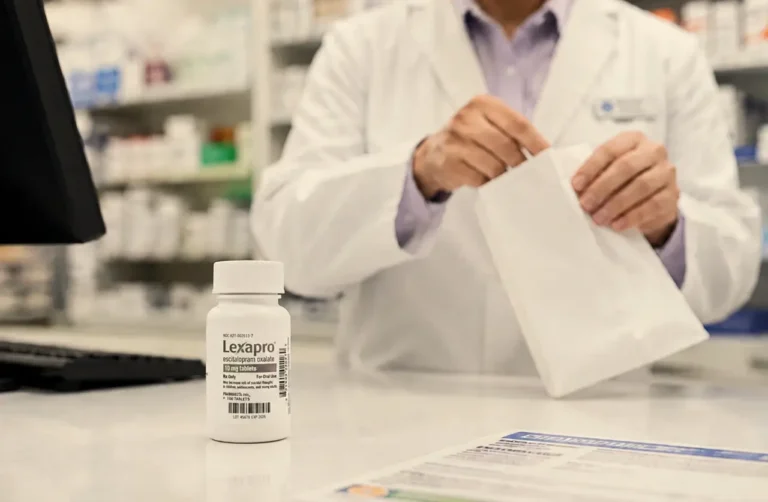
- Selective serotonin reuptake inhibitors (SSRIs), which are the most commonly prescribed type: sertraline (Zoloft®), escitalopram (Lexapro®), fluoxetine (Prozac®), citalopram (Celexa®), and paroxetine (Paxil®). Doctors typically try sertraline (Zoloft) or escitalopram (Lexapro) first.
- Serotonin and norepinephrine reuptake inhibitors (SNRIs), which act on a second brain chemical alongside serotonin: venlafaxine (Effexor®), duloxetine (Cymbalta®), and desvenlafaxine (Pristiq®).
- Atypical antidepressants, which don’t fit either class: bupropion (Wellbutrin®), mirtazapine (Remeron®), and trazodone (Desyrel®).
Each of these medications requires a diagnosis and prescription. Dosing starts low and builds slowly, and the first few weeks are usually easier than people expect. See the main antidepressant classes for a closer look at how the types differ.
We do not prescribe controlled medications for mental health. That includes the anti-anxiety medications Xanax®, Valium®, Ativan®, Klonopin®, Librium®, Restoril®, and Halcion®, the stimulants Adderall®, Ritalin®, Concerta®, and Vyvanse®, and the sleep medications Ambien® and Lunesta®.
How long it takes antidepressants to start working
Our clinicians typically see the full effect of an antidepressant in 2 to 8 weeks. The National Institute of Mental Health puts the timeline at 4 to 8 weeks.
Everyone responds differently, and improvement often comes gradually. Some people notice better sleep, appetite, or concentration before their mood lifts, and that’s still progress.
No one should stop or change an antidepressant on their own. If it isn’t working, speak with your doctor about it at your next visit. They’ll know how to safely make changes to your treatment.
What side effects to expect, and what usually settles
Most side effects from antidepressants are short-lived and manageable in the first few weeks. Common side effects can include:
- Upset stomach, nausea, or diarrhea
- Headache
- Loss of appetite
- Shakiness or sweating
- Sexual side effects
- A temporary increase in anxiety when you first start
Sexual side effects (a lower sex drive or difficulty reaching orgasm) can be especially hard or embarrassing to talk about, but they’re worth mentioning. There are ways to manage them.
If a side effect doesn’t improve, talk about it at your next visit instead of stopping medication on your own. Your doctor can adjust the dose or try a different medication.
All antidepressant medications carry a boxed warning. Young adults under 25 may have an increase in suicidal thoughts or behavior, most often in the first weeks or after a dose change, and anyone starting one should be watched closely early on.
If you are having thoughts of suicide or self-harm, call or text 988 to reach the 988 Suicide and Crisis Lifeline, or chat at chat.988lifeline.org. In an emergency, call 911.
At every visit, your clinician will assess for suicidal thoughts and signs of emerging mania. Identifying these changes early allows your care team to adjust treatment promptly and help keep you safe.
If you’re pregnant or breastfeeding
Tell your doctor at your visit if you’re pregnant, planning to become pregnant, or breastfeeding, and especially if you’re in the last few months of pregnancy. If it comes up between visits, book a visit. No medication in this guide is named as safe or unsafe during pregnancy, and pregnancy alone isn’t a reason to stop a medication on your own. Stopping carries its own risk, and it’s a decision to make with your doctor.
What talk therapy for depression is like
Cognitive behavioral therapy (CBT) and interpersonal therapy are the two approaches the National Institute of Mental Health names as evidence-based for depression.
Cognitive behavioral therapy works on the connection between thoughts, feelings, and behavior. Interpersonal therapy focuses on relationships and life changes that may be contributing to how you feel. Both typically take about 8 to 16 sessions, but the timeline varies from person to person. Therapy can be provided effectively in person or by video.
We don’t provide talk therapy for depression. Our counseling service is available only to patients already in Medication-Assisted Treatment with us. If you’re looking for a therapist, our guide to what therapy typically costs is a good place to start.
Why doctors often recommend medication and therapy together
Clinicians recommend combining medication and therapy because, in their experience, it generally works better than either alone.
Research backs this up, too. In a review of more than 100 studies covering nearly 12,000 patients, people who combined therapy and medication generally did better than people who used only one. On their own, therapy and medication worked about the same as each other.
The official treatment guideline is more cautious. It found no real advantage to combining the two over an antidepressant alone, and treats combining them as an option, not a firm recommendation.
Still, raising the idea of combining medication and therapy is a normal thing to bring up at a visit. Starting with one doesn’t rule out adding the other later.
What exercise and daily habits actually do
A large 2024 review found that walking or jogging, yoga, and strength training can help reduce symptoms of depression, with more vigorous exercise generally showing greater benefits. While the findings are encouraging, the researchers noted that confidence in the evidence was limited by weaknesses in many of the 218 studies reviewed. Exercise can help, and it works best alongside treatment rather than in place of it.
Sleep and routine matter too. Keeping a regular bedtime and wake time, and eating regular meals, are the two habits the National Institute of Mental Health identifies as worth prioritizing.
If your first medication hasn’t helped
Treatment-resistant depression means not getting better after trying at least two antidepressants. If your first medication hasn’t helped, trying a second is a normal, common next step. It’s not a sign that your case is unusually difficult.
Clinicians typically follow a set treatment path for patients with treatment-resistant depression:
- Try a different SSRI: Sometimes a different medication in the same class works even when the first one didn’t.
- Move to an SNRI: Most often chosen when ongoing pain is also part of the picture.
- Add bupropion (Wellbutrin): Goes alongside your current medication rather than replacing it.
- Treat any leftover sleep problems: Trazodone (Desyrel) or mirtazapine (Remeron) can help with sleep issues that haven’t improved.
Finding the right treatment can take time. Research shows that some people improve after trying additional medications, even when their first treatment hasn’t worked. Your clinician can help you decide what to try next based on your symptoms, side effects, and response to previous treatments.
Important: Every medication works differently for every person. It truly depends on how your body and mind respond to treatment. The only way to know if a second, third, or fourth medication will work for you is to try it at the right dose under the guidance of your doctor. It can be frustrating and take time, but it’s worth trying again.
How long depression treatment usually lasts
Clinicians usually continue treatment for at least a year after symptoms have settled, and about two years if depression has come back before. As always, this differs from person to person and depends on how you respond to treatment. Stopping treatment too early is a leading cause of depression returning, which is the main reason this timeline matters.
Stopping a medication is gradual and planned with your doctor, ideally during a period that isn’t already stressful. Visits happen more often early in treatment and less often once you’re stable.
Is depression just a chemical imbalance?
The popular idea that depression is caused by low serotonin (a chemical in your brain) is an oversimplification. Depression is more complicated than simply having low serotonin. A large research review found no clear evidence that low serotonin causes depression. On the other hand, other researchers disagree.
Scientists believe depression involves many factors, including brain activity, genes, stress, and life experiences.
Antidepressants can still help, even if depression isn’t caused by low serotonin. Research shows that these medications help many people with depression, and scientists continue to learn more about how they work. If your medication is helping, keep taking it as prescribed and talk to your clinician before making any changes.
How to start treatment
Getting treatment for depression starts with talking to a healthcare professional about your symptoms. A primary care doctor or another qualified clinician can evaluate your symptoms, discuss your treatment options, and prescribe an antidepressant if it’s right for you. You don’t necessarily need to see a psychiatrist to get started.
As of December 2, 2025, about 40% of the US population (roughly 137 million people) lived in an area designated as having a shortage of mental health professionals. It’s one of the biggest reasons more patients are turning to telemedicine appointments.
Here are a few ways to find care right now:
- Your primary care doctor
- An online appointment with QuickMD
- The federal treatment locator, which includes community mental health centers
You can reach out to see a QuickMD doctor for depression at any time. Appointments are often available the same day, seven days a week. A licensed clinician will evaluate you and, if appropriate, prescribe an antidepressant and begin your treatment.
A mental health visit with us costs $99, and you don’t need insurance (or a membership) to get an appointment.
Frequently asked questions about depression treatment
Are antidepressants habit-forming?
Not in the way most people mean. The antidepressants in this guide aren’t on the federal government’s list of controlled substances, the medications it restricts most tightly because of their potential for dependence. Stopping suddenly can still cause physical symptoms, so raise any change you’d like to make at your next visit instead of adjusting on your own. A small number of newer medications for depression are federally scheduled.
Can you drink alcohol while taking an antidepressant?
You should limit or avoid alcohol while taking an antidepressant, since it can add to side effects like drowsiness and affect how well the medication works. If you drink regularly, raise it with your doctor at your next visit so you can talk through what makes sense for you.
Do antidepressants cause weight gain?
The effect on weight varies across medications and among people. How it plays out for you isn’t predictable in advance, so it’s worth raising at your next visit if weight change is a concern.
What happens if I miss a dose?
Take it as soon as you remember unless it’s close to the time for your next one, in which case, skip the missed dose and continue as scheduled. Don’t take a double dose to make up for a missed one. If you’re often missing doses, mention it at your next visit.
How do I know if my depression is serious enough to get treatment?
If what you’re feeling is affecting your sleep, your ability to function day-to-day, or how you feel about being here, it’s serious enough to be evaluated. You don’t have to meet a certain severity threshold for treatment to be worth considering, and a first visit is just a conversation about what’s going on for you.
Does starting an antidepressant mean taking it forever?
No. How long treatment lasts differs from person to person. Many people take an antidepressant for a defined period rather than indefinitely, with that timeline planned alongside their doctor.
Disclaimer
Articles on this website are meant for educational purposes only and are not intended to replace professional medical advice, diagnosis or treatment. Do not delay care because of the content on this site. If you think you are experiencing a medical emergency, please call your doctor immediately or call 911 (if within the United States). This blog and its content are the intellectual property of QuickMD LLC and may not be copied or used without permission.
References
National Institute of Mental Health. (2024). Depression (NIH Publication No. 24-MH-8079). U.S. Department of Health and Human Services. https://www.nimh.nih.gov/health/publications/depression
National Institute of Mental Health. (n.d.). Mental health medications. U.S. Department of Health and Human Services. https://www.nimh.nih.gov/health/topics/mental-health-medications
MedlinePlus. (n.d.). Sertraline. U.S. National Library of Medicine. https://medlineplus.gov/druginfo/meds/a697048.html
Qaseem, A., Owens, D. K., Etxeandia-Ikobaltzeta, I., et al. (2023). Nonpharmacologic and pharmacologic treatments of adults in the acute phase of major depressive disorder: A living clinical guideline from the American College of Physicians. Annals of Internal Medicine, 176(2), 239–252. https://doi.org/10.7326/M22-2056
Cuijpers, P., Noma, H., Karyotaki, E., Vinkers, C. H., Cipriani, A., & Furukawa, T. A. (2020). A network meta-analysis of the effects of psychotherapies, pharmacotherapies and their combination in the treatment of adult depression. World Psychiatry, 19(1), 92–107. https://pmc.ncbi.nlm.nih.gov/articles/PMC6953550/
Noetel, M., Sanders, T., Gallardo-Gomez, D., et al. (2024). Effect of exercise for depression: Systematic review and network meta-analysis of randomised controlled trials. BMJ, 384, Article e075847. https://www.bmj.com/content/384/bmj-2023-075847
Rush, A. J., Trivedi, M. H., Wisniewski, S. R., et al. (2006). Acute and longer-term outcomes in depressed outpatients requiring one or several treatment steps: A STAR*D report. American Journal of Psychiatry, 163(11), 1905–1917. https://doi.org/10.1176/ajp.2006.163.11.1905
Moncrieff J, Cooper RE, Stockmann T, Amendola S, Hengartner MP, Horowitz MA. The serotonin theory of depression: a systematic umbrella review of the evidence. Molecular Psychiatry. 2023;28(8):3243-3256. doi.org/10.1038/s41380-022-01661-0
Pigott, H. E., Kim, T., Xu, C., Kirsch, I., & Amsterdam, J. (2023). A reanalysis of the STAR*D study’s patient-level data with fidelity to the original research protocol. BMJ Open, 13(7), Article e063095. https://pmc.ncbi.nlm.nih.gov/articles/PMC10373710/
Bartova, L., Lanzenberger, R., Rujescu, D., & Kasper, S. (2023). Reply to: The serotonin theory of depression: A systematic umbrella review of the evidence. Molecular Psychiatry, 28(8), 3153–3154. https://doi.org/10.1038/s41380-023-02093-0
Hirschfeld, R. M. A. (2001). The comorbidity of major depression and anxiety disorders. Primary Care Companion to the Journal of Clinical Psychiatry, 3(6), 244–254. https://pmc.ncbi.nlm.nih.gov/articles/PMC181193/
Health Resources and Services Administration. (2025). State of the behavioral health workforce, 2025. U.S. Department of Health and Human Services. https://bhw.hrsa.gov/sites/default/files/bureau-health-workforce/data-research/Behavioral-Health-Workforce-Brief-2025.pdf
National Institute of Mental Health. (n.d.). Major depression. U.S. Department of Health and Human Services. https://www.nimh.nih.gov/health/statistics/major-depression
National Health Service. (n.d.). Treatment: Depression in adults. https://www.nhs.uk/mental-health/conditions/depression-in-adults/treatment/
Substance Abuse and Mental Health Services Administration. (n.d.). FindTreatment.gov. U.S. Department of Health and Human Services. https://findtreatment.gov/
988 Suicide and Crisis Lifeline. (n.d.). https://988lifeline.org/
QuickMD has strict referencing policies and relies on reputable sources, including peer-reviewed research, clinical guidelines, medical organizations, and government and public health agencies, among others. Learn more about how we ensure accuracy in our content by reading our editorial guidelines.